Guitar Intervals C Major, A Minor, & Related Modes

Last updated 3/2025
MP4 | Video: h264, 1920x1080 | Audio: AAC, 44.1 KHz, 2 Ch
Language: English | Duration: 33h 4m | Size: 60.68 GB
A Structured Approach to Navigating the Fretboard Using the G-Shaped C Major Position
What you'll learn
Identify and recall the C Major scale intervals (Major 2nd, Major 3rd, Perfect 4th, Perfect 5th, Major 6th, Major 7th) across all strings.
Recognize the CAGED system's G-shaped C Major position and its role in scale navigation.
Explain the relationship between the C Major scale and its modes, including how shifting the tonic alters the modal structure.
Describe the impact of B-string tuning differences on interval shapes and positioning.
Demonstrate the ability to locate and measure intervals on every string using C Major and its modal centers (D Dorian, E Phrygian, etc.).
Use an Excel fretboard diagram to visualize and reinforce interval and mode relationships.
Compare and contrast the intervallic differences between C Major, D Dorian, and E Phrygian to understand modal construction.
Differentiate how intervals are mapped when shifting the tonic within the same note set.
Assess personal understanding of modal relationships and identify weak points in interval recognition.
Critique and adjust finger positioning strategies for efficient fretboard navigation.
Develop personal practice routines using the Excel fretboard tool to reinforce understanding of modes and intervals.
Requirements
Basic Guitar Proficiency – Students should be comfortable fretting notes, picking/strumming, and navigating the fretboard at a fundamental level.
Familiarity with Standard Tuning – Understanding that the guitar strings are tuned E-A-D-G-B-E and how tuning affects note placement.
Basic Understanding of the C Major Scale – Students should have some familiarity with scale construction and major scale patterns on the guitar.
Some Knowledge of Intervals – A basic awareness of musical intervals (e.g., major 2nd, major 3rd, perfect 5th) will be helpful but will also be reviewed in the course.
Interest in Fretboard Navigation & Theory – The course is designed for guitarists looking to deepen their understanding of intervals, modes, and fretboard organization rather than just learning songs by rote.
Description
In this course, we will explore the intervals within the Major scale and its related modes using a structured approach designed to enhance your understanding of interval relationships, mode construction, and fretboard navigation.
We will focus on the G-shaped C Major position (from the CAGED system), sometimes called position one as our reference. Starting with the C note on the 8th fret of the top string, we will systematically identify each interval within the C Major scale across all strings. This method involves locating the major 2nd, major 3rd, Perfect 4th, Perfect 5th, Major 6th, & major 7th intervals on each string before moving to a new root note, such as the D note located on the 5th fret of the second string. We will measure each interval related to the D Dorian mode, all the notes being the same but the tonic changing from C to D and there for the intervals changing to those of a Dorian Mode. We will then repeat this process for the next note, an E note, resulting in E Phrygian mode.
By repeating this process of shifting the tonic focus while using the same notes, we will
• Develop a deeper familiarity with interval shapes across the fretboard.
• Strengthen our understanding of the modal relationships.
• Recognize intervallic differences between modes.
• Adapt to the B string tuning difference when mapping interval structures and shapes.
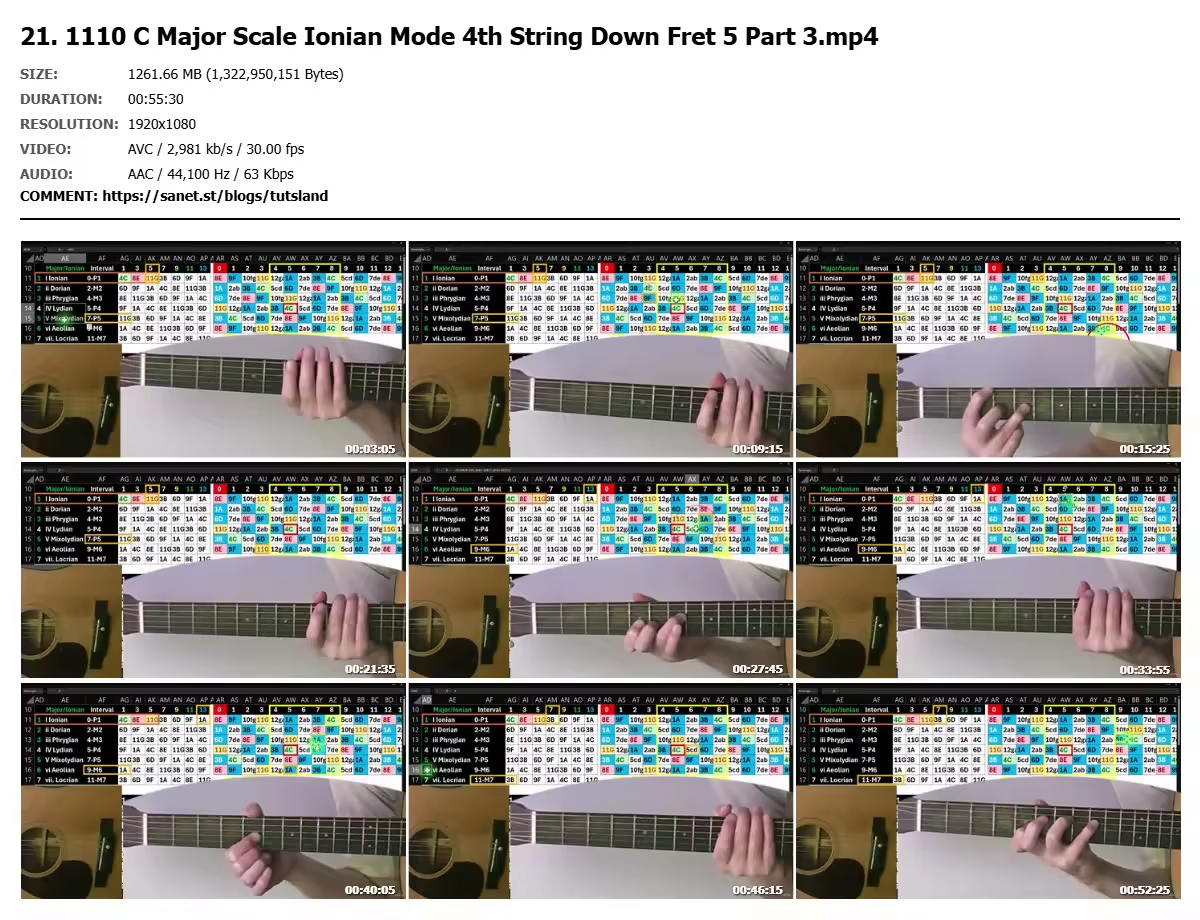
To aid visualization, we will utilize a custom Excel worksheet that simulates the fretboard. The low (heavy) string will be displayed on top, ensuring the diagram aligns with your playing perspective. Additionally, to maintain orientation consistency, instructional materials will be mirrored to match the player's viewpoint.
This structured approach will solidify your fretboard knowledge, making it easier to apply scales, intervals, and modes confidently in your playing. Whether you are new to intervals & modes or looking to deepen your understanding, this course provides a practical and methodical pathway to mastering the Major scale and its related modes on the guitar.
Who this course is for
Players looking to deepen their understanding of scale intervals and modal relationships.
Guitarists who want to improve their ability to visualize and navigate the fretboard more effectively.
Musicians who already know basic scales but want to understand their intervallic structure and application.
Players who have learned basic scale patterns (such as the C Major scale) and want to explore interval-based fretboard mapping.
Guitarists with some experience with the CAGED system who want to apply it to modes.
Musicians who want to enhance their soloing and improvisation skills by understanding how intervals and modes interact.
Players seeking to develop better phrasing and note choice based on intervallic awareness.
Guitarists interested in expanding their theoretical knowledge through hands-on fretboard practice.
Players who have been learning on their own and want a structured approach to understanding intervals and modes.
Guitarists who struggle with visualizing notes and intervals across the entire fretboard.
Teachers looking for new methods to explain intervals and modal relationships to their students.
Instructors seeking a systematic approach to teaching intervallic relationships on the guitar.
Quick check before we show the links
Helps us keep automated scrapers from hammering the filehosts.