Master Industrial Automation & Control Systems

Published 6/2026
MP4 | Video: h264, 1920x1080 | Audio: AAC, 44.1 KHz, 2 Ch
Language: English | Duration: 6h 9m | Size: 8 GB
DCS, PLC, SCADA & SIS | IEC 61511 & IEC 62443 | instrumentation, industrial networks & IIoT
What you'll learn
Specify field instrumentation for pressure, temperature, flow and level using ISA datasheets and correct measurement technology
Size and select control valves, including Cv calculation, actuator sizing and positioner choice
Apply ATEX hazardous area classification and verify intrinsic safety loops against entity parameters
Configure DCS control strategies including PID, cascade, ratio and feedforward in function blocks
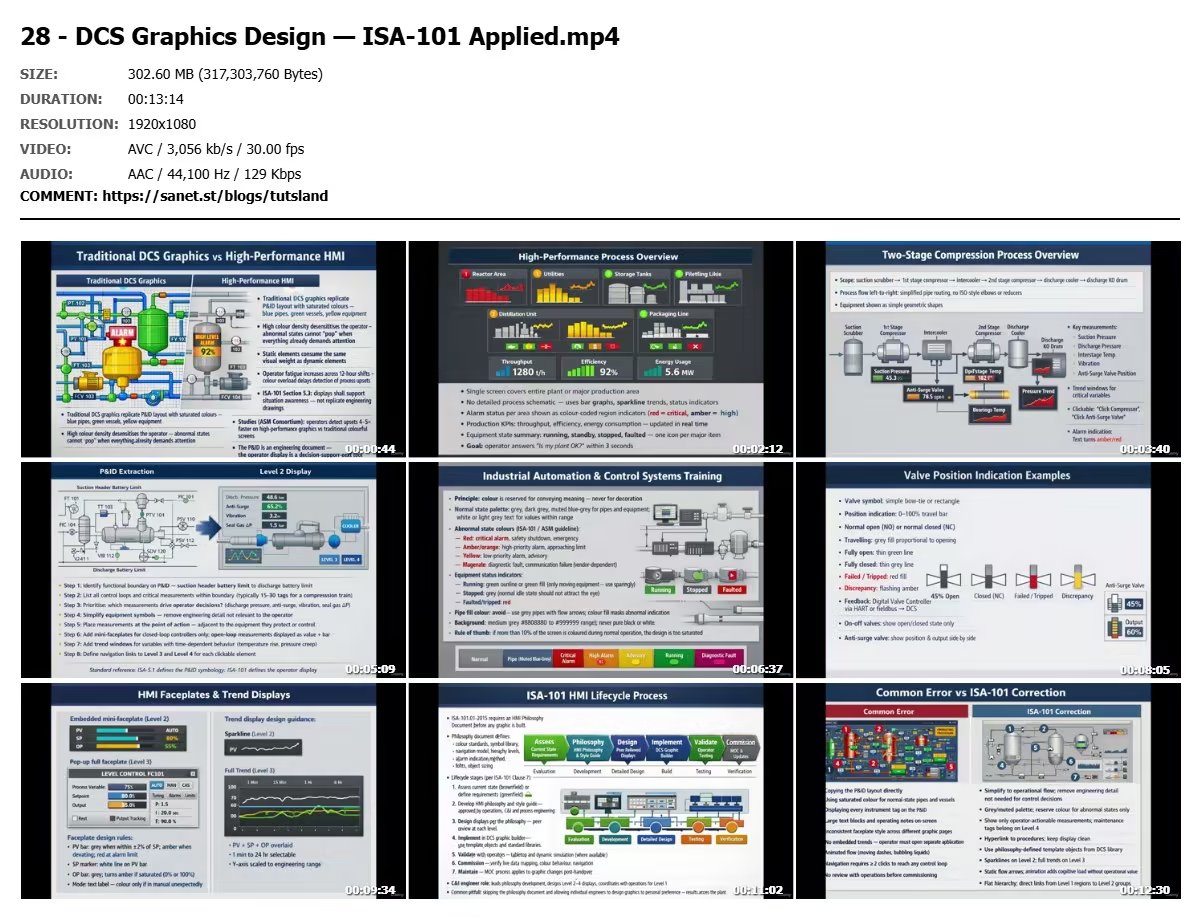
Design high-performance HMI graphics and rationalise alarms to ISA-18.2, ISA-101 and EEMUA 191
Program PLCs in all five IEC 61131-3 languages and build interlocks, sequences and motor control logic
Architect SCADA systems with RTUs, telemetry and DNP3 / IEC 60870-5 for distributed assets
Select and diagnose industrial networks — Modbus, PROFIBUS, PROFINET, EtherNet/IP and OPC UA
Determine SIL and conduct a LOPA, then write a safety requirement specification to IEC 61511
Verify a safety instrumented function by calculating PFDavg against architectural constraints
Design IEC 62443 zones and conduits and secure an OT network using the Purdue model
Implement IIoT architecture with MQTT Sparkplug B, a Unified Namespace and edge computing
Integrate instrument, PLC, DCS, SCADA, SIS and IIoT layers into one plant-wide control philosophy
Map career paths and certification routes — ISA CAP, ISA CCST, TUV FSEng and GICSP
Requirements
A background in C&I, control, automation, electrical, process or mechanical engineering is assumed
Familiarity with P&IDs and basic process plant equipment
This is a practitioner-level course, not an introduction to engineering — it moves quickly through fundamentals
No specific DCS, PLC or SCADA software is required to follow the material
A willingness to think in terms of complete systems rather than isolated components
Description
Every major process plant shutdown, safety incident, and control system failure has one root cause — engineers who understand the process but not the control systems, or control systems engineers who never received structured training in the standards, architectures, and methodologies their work depends on.
This course closes that gap. It covers the complete control systems stack as it is actually engineered on operating plants: field instrumentation, distributed control systems, PLCs, SCADA, industrial networks, safety instrumented systems, OT cybersecurity, and industrial IoT — nine domains that most engineers only ever learn in fragments, on the job, under deadline pressure.
The work is anchored in the standards that govern it. You will work with IEC 61511 for functional safety, IEC 62443 for OT cybersecurity, IEC 61131-3 for PLC programming, ISA-18.2 and EEMUA 191 for alarm management, ISA-101 for HMI design, and the ATEX and intrinsic safety framework for hazardous area instrumentation. These are named, explained, and applied — not mentioned in passing.
Section one builds the measurement foundation: pressure, temperature, flow, and level instruments, smart transmitters and HART, control valve selection and sizing, and hazardous area protection concepts. Every control loop that follows depends on getting this layer right.
From there the course moves into the systems that act on those measurements. The DCS section covers architecture, control strategies, function block configuration, alarm management, and the engineering workflow from database build through commissioning. The PLC section teaches all five IEC 61131-3 languages and the practical programming of interlocks, sequences, and motor control.
The SCADA and industrial communications sections address the wide-area and device-level layers: RTUs and telemetry, DNP3 and IEC 60870-5, then the protocols that connect everything — Modbus, PROFIBUS, PROFINET, EtherNet/IP, Foundation Fieldbus, and OPC UA — plus the network diagnostics that resolve the faults responsible for a disproportionate share of plant downtime.
Three advanced domains follow. Functional safety covers the IEC 61511 lifecycle, SIL determination, LOPA, the safety requirement specification, SIF design, and SIL verification. OT cybersecurity covers the IEC 62443 framework, zones and conduits, the Purdue model, and the threat landscape from Stuxnet to TRITON to Colonial Pipeline. The IIoT section covers edge computing, MQTT Sparkplug B, the Unified Namespace, digital twins, and model predictive control.
A capstone section integrates all eight domains through a worked greenfield gas processing facility — instrument to PLC and DCS to SCADA to SIS to IIoT — so the interfaces between systems, where real projects succeed or fail, are made explicit rather than left implicit.
The course is built by a practising engineer with 15+ years delivering safety-critical control system projects across oil and gas, energy, and industrial infrastructure — including DCS specification, SIS design, functional safety assessments, OT cybersecurity assessments, and IIoT implementation on major process plants. Every technique is taught the way it is applied on live projects, not the way it reads in a vendor manual.
Each section ends with a quiz, and the masterclass adds a 40-question final exam that tests integration across all nine domains. Downloadable worksheets, datasheets, and worked examples support the lessons throughout.
If you want to operate across the full control systems stack with the confidence of someone who has been trained properly — not pieced it together project by project — start with section one and work through to the capstone.
Who this course is for
C&I, control and automation engineers who specify, design or commission control systems on process plants
Maintenance, commissioning and control room technicians who keep DCS, PLC and SCADA systems running
Electrical, process and mechanical engineers who interface with control systems and want to understand them properly
System integrators, panel builders and automation contractors delivering control system projects
Operations, plant and reliability engineers who depend on control systems and want to engineer rather than just operate around them
Technical sales, application and field service staff at instrument, DCS, PLC and SCADA vendors
Graduates, apprentices and career changers entering automation who need practical grounding beyond theory
Quick check before we show the links
Helps us keep automated scrapers from hammering the filehosts.