Experimental Thinking For Ux Design
MP4 | Video: h264, 1920x1080 | Audio: AAC, 44.1 KHz
Language: English | Size: 644.79 MB | Duration: 1h 20m
Learn how to ask the right questions, run effective tests, understand results, and make evidence-based decisions
What you'll learn
How to formulate clear, testable hypotheses in UX research
How to distinguish observation from explanation in user behavior
How to avoid common errors in research and data interpretation
How to evaluate evidence and make more reliable design decisions
Requirements
No
Description
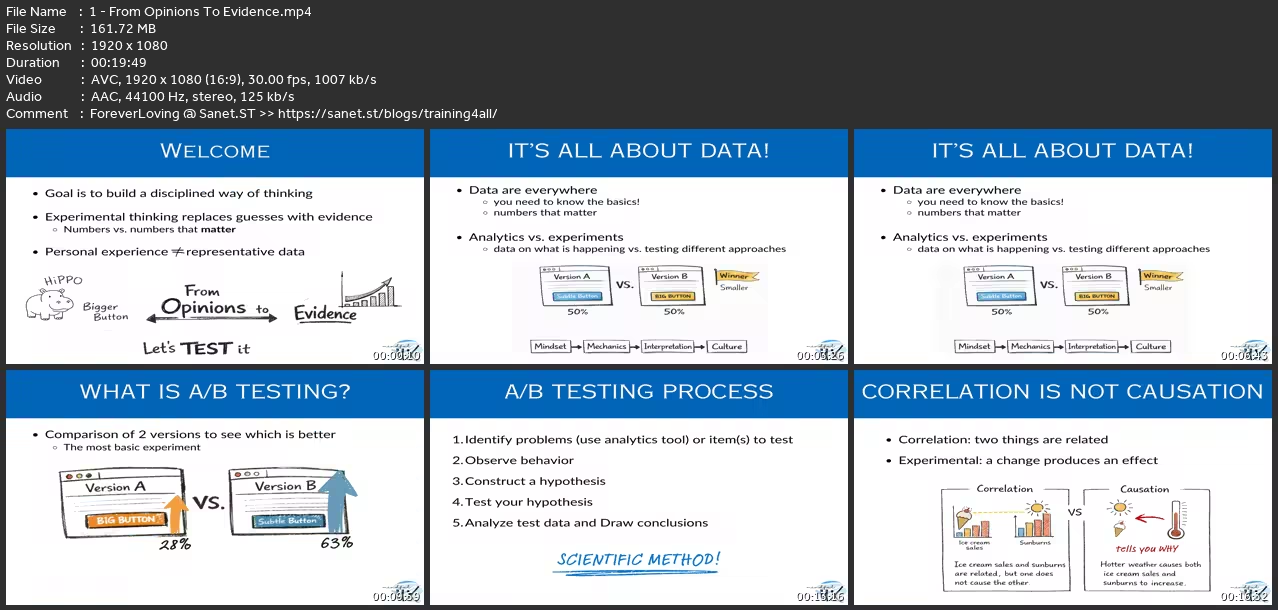
You’ve run usability tests, gathered user feedback, and made design decisions. You’ve run A/B tests.Yet, outcomes don’t always improve.Even with usability tests and A/B experiments, results can be inconsistent, difficult to interpret, or even misleading, thereby producing conclusions that feel confident but are not always reliable.This brief course introduces experimental thinking in UX design: a structured way to test ideas, interpret results, and make decisions based on evidence rather than intuition.Instead of focusing only on tools or methods, this course focuses on the reasoning behind research. You’ll learn how to formulate clear hypotheses, design tests that actually answer your questions, and interpret results without overconfidence. The goal is not just to run experiments, but to understand what your results mean and what they don’t mean.If you’ve ever struggled to explain why a design works or fails, relied on “gut feeling” in decisions, questioned the validity of usability test results, or felt that UX research lacks structure or rigor, this brief course will give you a clearer and more systematic way to think.What makes this course different is that most UX research courses teach methods. This course teaches how to think.You won’t just learn how to run tests; you’ll learn how to reason about user behavior, evaluate evidence, and make decisions you can defend.Better UX decisions start with experimental thinking.
UX designers,UX students,Design teams
Quick check before we show the links
Helps us keep automated scrapers from hammering the filehosts.