Assimilating Modes For The Jazz Pianist

MP4 | Video: h264, 1280x720 | Audio: AAC, 44.1 KHz
Language: English | Size: 1.36 GB | Duration: 1h 19m
Learning Jazz as a Language
What you'll learn
Improve skills in music improvisation by assimilating modes
Develop the language of modal music
Achieve joy in achieving the flow of creating music
Placing all essential modes in the subconscious
Requirements
Need a basic understanding of music theory and have basic piano skills
Description
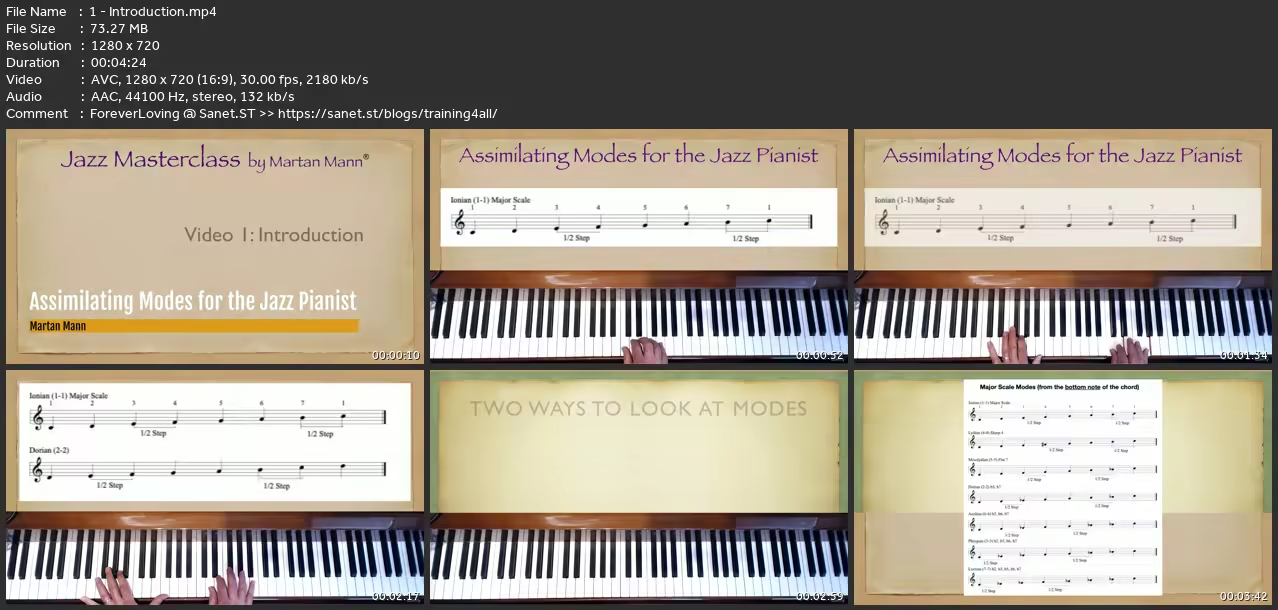
The purpose of this course is to provide exercises to assimilate modes into the subconscious. Modes are the essence of harmony. Modes are scales starting from each note in the scale. They use the same notes as the scale, however the arrangement of half-steps to whole-steps changes with each mode. This creates a different feeling or emotion for each mode. Since music is an emotional language, it is important for the composer or improviser to identify each mode in his/her musical vocabulary. This means that it is vitally important that the musician connect emotionally to each mode. This allows the musician to “speak” creatively. Therefore, it is important that all musicians intimately develop a “relationship” with as many scales and modes as possible. Of course, this also means that the scales and modes should be practiced in all keys. Remember: “All keys are really one key”.When a musician improvises on a chord, the chord can be realized as a scale or mode. This allows for many new notes, voicings, structures and inversions of the original chord. Also, one chord might have many options of different scales and modes. This creates possibilities for a deepening range of emotions. This increases the musician’s ability to tell a “musical story”.
By studying this course, you will develop the language of music by placing essential modes in the subconscious.
Quick check before we show the links
Helps us keep automated scrapers from hammering the filehosts.